Pneumatic Compression vs. Manual Lymphatic Drainage
Updated October 20, 2026 · 2 min read
"Lymphatic" has become one of wellness's favorite words, and for good reason. Supporting your lymphatic system can help you feel lighter and less puffy.
Two popular ways to do it: pneumatic compression and manual lymphatic drainage massage. Here's how they compare.
A Quick Lymphatic Refresher
Your lymphatic system moves fluid and waste through your body. Unlike blood, lymph doesn't have a pump like the heart. It relies on muscle movement and pressure changes.
When you're sore, sedentary or traveling, fluid can build up and leave you feeling puffy and heavy.
How Pneumatic Compression Works
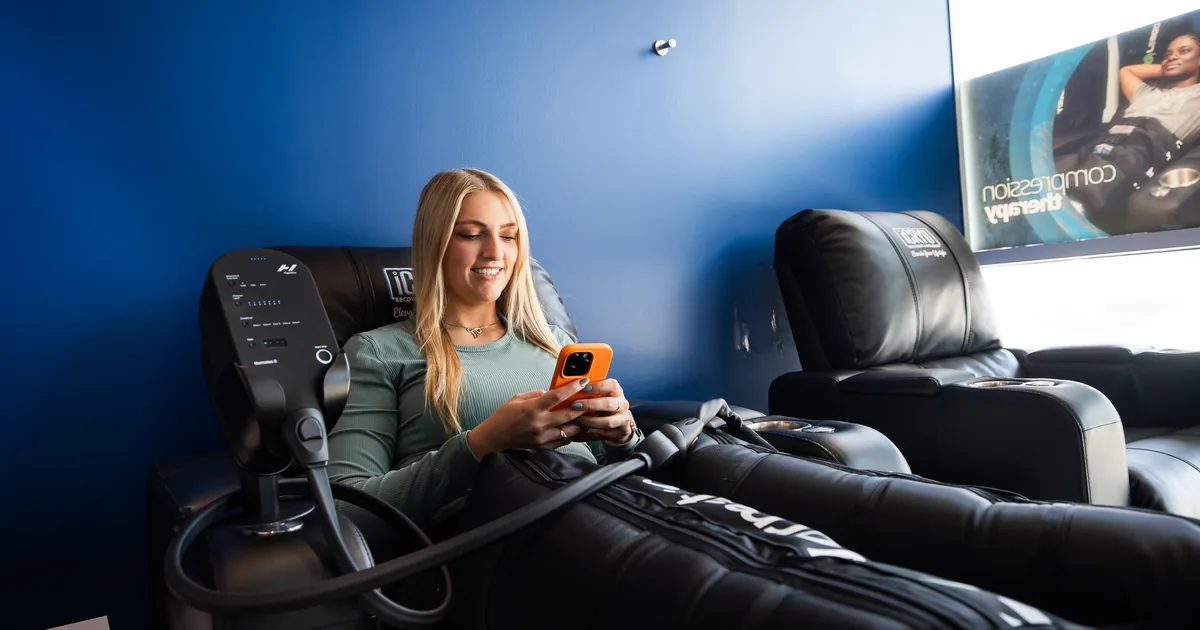
Air-filled sleeves wrap your legs (or arms or hips) and inflate in waves from bottom to top, mimicking your muscles' natural pumping action.
Learn more in What Is Compression Therapy?
How Manual Lymphatic Drainage Works
A trained therapist uses very light, rhythmic strokes to encourage lymph to move toward lymph nodes. It's gentle, much lighter than a typical massage.
Side-by-Side Comparison
| Pneumatic Compression | Manual Lymphatic Drainage | |
|---|---|---|
| Method | Air-filled sleeves | Hands-on massage |
| Best areas | Legs, arms, hips | Can target specific areas, including the face |
| Consistency | Same pressure pattern every time | Depends on the therapist |
| Session length | Often 20–30 minutes | Often longer |
| Feel | Firm, rhythmic squeeze | Very light touch |
| Easy to do regularly | Yes | Depends on scheduling |
Choose Compression If…
- Your main focus is tired, heavy legs
- You want recovery after training
- You'd like an efficient, repeatable session
- You want to relax hands-free
Choose Manual Lymphatic Drainage If…
- You want to target the face or specific areas
- You prefer hands-on treatment
Use Both
Many people use compression regularly for recovery and add manual lymphatic massage occasionally.
Safety First
Lymphatic treatments aren't right for everyone. Talk with a provider if you have a history of blood clots, heart failure, active infections or cancer treatment.
Pairing With Body Treatments
Supporting circulation and recovery is a nice complement to body treatments like EMSCULPT NEO. Read What Is EMSCULPT NEO?
Ready to feel lighter?
Compression Therapy in Ashburn, VA
iCRYO One Loudoun is at 20459 Exchange St Suite A102, Ashburn, VA 20147, in One Loudoun with free on-site parking. We welcome clients from Leesburg, Sterling, Brambleton, Broadlands, Lansdowne and South Riding.
Questions? Call (703) 729-4201.
Compression Therapy FAQs
Is compression therapy the same as lymphatic drainage?
Both support lymphatic flow, but they're different. Compression therapy uses air-filled sleeves. Manual lymphatic drainage is a gentle, hands-on massage by a trained therapist.
Which is better for puffiness?
Both can help with mild puffiness. Compression is efficient and great for legs. Manual drainage can target specific areas, like the face. The best choice depends on your goals.
Can I do both?
Yes. Some people use compression regularly and add manual lymphatic massage occasionally.
Who should avoid lymphatic treatments?
People with blood clots, heart failure, active infections or certain other conditions should talk with a doctor first.
iCRYO One Loudoun Team
The iCRYO One Loudoun team helps clients across Loudoun County look and feel their best.
Related Articles
What Is Compression Therapy? How Pneumatic Compression Works
Pneumatic compression uses air-filled sleeves to squeeze and release your legs, supporting circulation and recovery. Learn how it works in Ashburn, VA.
Compression Therapy Benefits for Recovery and Circulation
Faster-feeling recovery, less soreness, lighter legs and pure relaxation. Here are the benefits of pneumatic compression therapy at iCRYO One Loudoun.
How Often Should You Use Compression Therapy?
How often should you use compression boots for recovery, travel or tired legs? Get session length, frequency and timing tips from iCRYO One Loudoun.
Learn more about Compression Therapy in Ashburn, VA
View the Compression Therapy service page →